.jpg)
Ultimate Guide to Heritage Designation for Victoria Properties: Rules, Permits, Incentives & Owner Impacts

Photo: Located on the corner of Foul Bay & McNeil Rd, this heritage-designated home in Oak Bay was originally designed and built by architect Samuel Maclure.
I’ve lost count of how many times a homeowner has called me in a bit of a panic: “Sean, my house is heritage-listed—does that mean I can’t fix the crumbling mortar on my chimney without jumping through endless hoops?” Or, “I love the old character of my Fairfield home, but I’m terrified designation will make repairs impossible or bankrupt me.”
Those calls always hit home because I’ve been in your shoes—not only as an owner, but as the mason who’s spent over 25 years on scaffolds and ladders, gently scraping away failed mortar joints from century-old brick, mixing custom lime mortars by hand, and watching relief wash over a client’s face when we finally get it right. Designation isn’t the scary red tape many imagine. In fact, for most of us who cherish these homes, it’s a quiet ally: it protects what we love, opens doors to real financial help, and ensures repairs are done thoughtfully so they last through another Victoria winter of rain and salt air.
This guide is for you—the homeowner in Oak Bay wondering about their stone foundation in need of repointing, the Uplands stone retaining walls in need of a steam cleaning and minor repairs, the Saanich family eyeing chimney work on their 1910s Craftsman, or anyone in Victoria staring at efflorescence on their brick façade. We’ll walk through registered vs. designated status, the real-world permit process (with timelines and fees), incentives like the Victoria Heritage Foundation grants (which I’ve seen change lives), how it plays out for masonry and other repairs, common myths I’ve heard over coffee with clients, and some stories from projects we’ve done together. My goal? To make this feel less like bureaucracy and more like a conversation about preserving something meaningful.

Photo: These stone pillars, acting as a gateway to a Samuel Maclure home on Foul Bay Rd. which has since been heritage-designated. The pillars were rebuilt to match the original stonework after being demolished by firefighters in order to put out a fire on the property. Stone & Trowel utilized a traditional lime mortar to rebuild them from the ground up and funding for this project was obtained through the Victoria/Oak Bay Heritage Foundation
1. What Heritage Designation Really Is (And Isn’t)
At its heart, heritage designation in British Columbia is a way communities say, “This place matters—let’s keep it that way.” Under the Heritage Conservation Act (HCA) and local bylaws, it recognizes buildings, landscapes, or even neighborhoods for their architectural beauty, historical stories, or cultural importance. In Greater Victoria, that often means pre-1940 homes with original brick chimneys, sandstone details, timber framing, or the kind of hand-laid stone foundations you don’t see anymore.
It’s not about freezing your house in 1920. It’s about guiding changes so the soul of the place stays intact while you live comfortably in the present. And yes—I’ve seen designated homes with modern kitchens, efficient windows, and seismic upgrades. The key is compatibility, not prohibition.
2. Registered vs. Designated: Clearing Up the Confusion
People often mix these up, but they’re different levels of recognition:
• Community Heritage Register (CHR) Listing — This is the “nice to know” level. Your property gets added to the local register (Victoria has over 500 entries) because it has heritage value—maybe it’s a rare Samuel Maclure design or part of a historic streetscape. No legal strings attached: you can paint, renovate exteriors, or even demolish (though most owners don’t want to). It flags the home’s worth to buyers and may open minor incentives, but that’s it.
• Heritage Designation — This is the protected status, created by a municipal bylaw after owner consent (it’s almost always voluntary). Specific features—exteriors, roofs, windows, chimneys, masonry—are safeguarded. Any change that could affect those needs a Heritage Alteration Permit (HAP). It binds future owners too, which actually protects your investment from someone down the road slapping on incompatible additions.
Most designated homes start on the register; designation is the next step when the community (and often the owner) wants stronger safeguards. In my experience, once owners understand it’s not a straitjacket, many warm to the idea—especially when grants enter the picture.
3. The Designation Process: Step by Step (It’s Not as Daunting as It Sounds)
The process varies slightly by municipality, but here’s the typical flow in Victoria, Oak Bay, and Saanich:
1. Nomination or Application — Often starts with you (or a heritage group) contacting the municipal heritage planner. A Statement of Significance (SOS) is prepared—detailing why the house matters (architecture, history, context).
2. Review & Consultation — Planners assess, sometimes with input from a Heritage Advisory Committee. Public notice may follow.
3. Council Approval & Bylaw — If green-lit, council passes a bylaw. Timeline: usually 3–12 months, depending on complexity.
4. Registration — It’s official, and you get a plaque or recognition if desired.
Costs are minimal (mostly planner time), and many owners initiate it themselves for the prestige and funding perks. I’ve had clients say the paperwork felt overwhelming at first, but the planner walked them through it like a helpful neighbor.
4. Permits for Repairs & Renovations: What Actually Happens
This is where the rubber meets the road—and where most fears live.
• Heritage Alteration Permits (HAPs): Needed for exterior changes affecting heritage features (e.g., repointing joints, replacing windows, new roofing, additions). In Victoria: Submit plans/photos online via Development Services; fees are typically $200–$500; decisions are often made in 4–8 weeks (faster for straightforward maintenance). Oak Bay’s Heritage Commission reviews for Heritage Conservation Areas (HCAs) like Prospect Lake area or Uplands. Saanich uses a similar advisory process for designated sites.
• Exemptions & Low-Hassle Work: Routine upkeep—like steam cleaning brick, minor mortar patching with matching lime mortar, or interior updates—usually skips the HAP if it doesn’t alter character. Always double-check with your planner (they’re surprisingly approachable).
Non-compliance? Fines can reach $50,000+, but honest mistakes rarely go there—most issues get resolved with a quick stop-work chat.
5. Incentives & Grants: The Part That Makes It Pay Off
Here’s where designation shines: real money to help with repairs.
• Victoria Heritage Foundation (VHF) House Grants — Administered for the City of Victoria. Applications open February 1 each year (2026 cycle is live now!). Matching grants (up to 50% of eligible costs) for conservation work—windows, siding, roofs, foundations, masonry repointing, and more. Maximums often $10,000–$20,000 per project, prioritizing original features on designated homes. We’ve seen clients cover a full chimney repoint or foundation stabilization this way—turning a scary bill into something manageable.
• Other Local Support — Victoria offers tax rebates/exemptions for heritage rehab (especially residential conversions). Oak Bay provides up to 25% grants (max around $10,000) for designated properties. Saanich’s Heritage Foundation offers preservation funding.
• Provincial & Federal — Heritage BC grants (up to $10k–$12k for planning/repairs), federal Historic Places cost-sharing.
In one Fairfield project, a VHF grant covered half of our lime mortar repointing costs on a fairly substantial chimney—client was thrilled, and the chimney’s now good for decades.
6. How Designation Affects Masonry & Other Repairs
For my world—masonry—this is practical gold. Designation pushes compatible materials: breathable lime mortar instead of rigid Portland-based cement mortars, preventing trapped moisture and spalling in our damp climate. HAPs might require mortar analysis or matching samples, but that’s a feature, not a bug—it avoids the “quick fix” that costs double later.
We’ve done HAP-approved steam cleans and repoints on dozens of designated homes; the process feels collaborative, not adversarial.
7. Common Myths I’ve Heard (And the Truth Behind Them)
• “I can’t change anything” — Interiors are usually wide open; exteriors allow for thoughtful updates.
• “It kills resale value” — Often boosts it—buyers pay premiums for protected character.
• “Repairs become unaffordable” — Grants offset costs; proper work saves money long-term.
• “Insurance is impossible” — Many providers prefer well-stewarded heritage homes.
• “Too much red tape” — Planners guide you; timelines are reasonable.
8. Real Stories from the Field
One Oak Bay client feared designation meant endless delays when it came to repairing her stone foundation. We got HAP approval in six weeks for a full repointing of the stonework—the grant covered material costs and a portion of the labour. She later said, “It felt like the city was helping me save my home, not fighting me.”
The relief when the foundation was no longer a safety concern? Priceless.
9. Next Steps: Where to Start
Check your status on the RAAD tool or municipal registry. Chat with your local heritage planner (they’re helpful!). Book a masonry assessment with us—we’ll advise on compliant options.

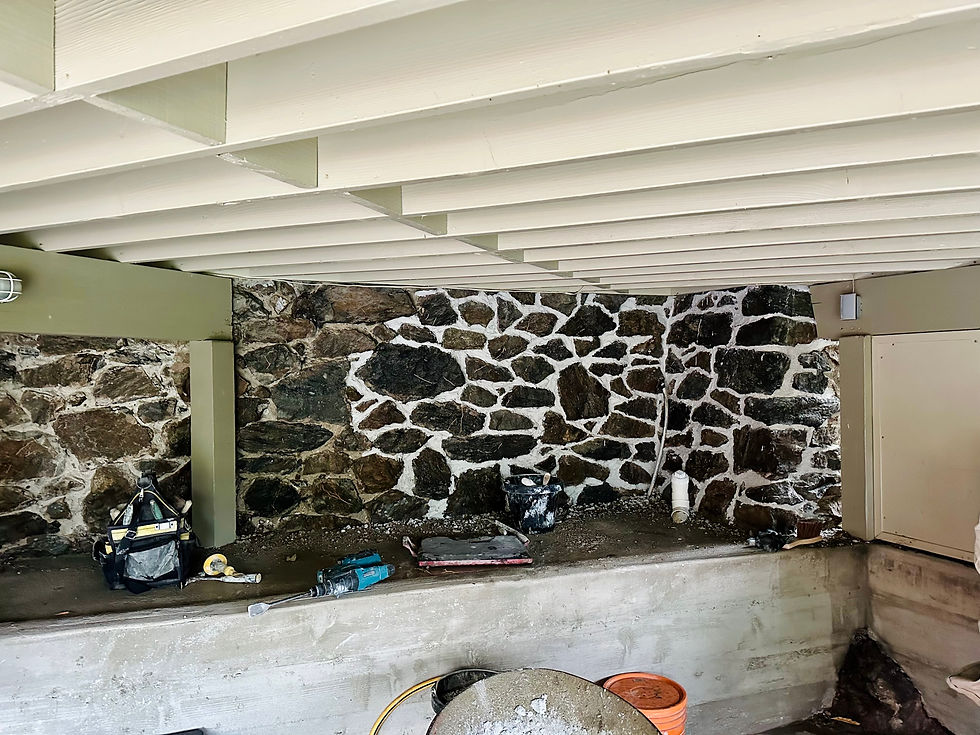
Photo: A stone foundation in Oak Bay which required repointing in order to safely support the frame of the house. Stone & Trowel utilized a traditional lime-based mortar known as Hotlime to repoint these stone walls to ensure compatibility with the original mortar.
Photo: The Porte Cochere of the Government House in Rockland after being steam cleaned and repointed by Stone & Trowel with compatible mortar to match the original character, style, and lime used in 1909.
10. FAQs: Your Most Common Questions Answered
I’ve fielded these questions hundreds of times over coffee on porches or during site assessments. Here’s straightforward, no-nonsense advice based on what actually happens in Greater Victoria.
1. How old does a house need to be to qualify for heritage designation?
Age isn’t the deciding factor—it’s heritage value. Many Victoria homes from the early 1900s (Edwardian, Craftsman, or Queen Anne styles) get recognized for their architecture, historical associations (e.g., built by notable locals), or role in a neighborhood’s story. I’ve worked on 1910s homes that weren’t “old enough” by some standards but earned designation for their intact original features. A 1930s house could qualify if it’s exceptional; a 1890s one might not if heavily altered.
2. Can I remove heritage designation if I change my mind later?
It’s possible but not easy or guaranteed. Designation is a bylaw, so removal requires a new council process (application, review, public input, vote). Success depends on showing changed circumstances or low remaining heritage value—rarely straightforward. Most owners I’ve spoken with end up appreciating the protection once they see the incentives kick in. Think of it as a long-term commitment, like a marriage to your home’s history.
3. How long does a Heritage Alteration Permit (HAP) take to get approved?
In Victoria, straightforward applications (e.g., repointing mortar or window upgrades) often take 4–8 weeks. More complex ones (additions or major alterations) can stretch to 3–6 months with revisions or committee review. Oak Bay and Saanich are similar—early consultation with the planner speeds things up. In my experience, submitting clear photos, plans, and a simple rationale (e.g., “matching original lime mortar to prevent spalling”) gets faster turnarounds.
4. What are the typical costs for a HAP application?
Fees in Victoria usually range from $200–$500, depending on project scope (minor maintenance is often lower or waived). Oak Bay and Saanich charge comparably. These are one-time fees—not ongoing. Compare that to the thousands saved through grants or avoided future damage—it’s a small price for getting it right the first time.
5. Are minor repairs like cleaning or touching up mortar exempt from permits?
Yes, in most cases. Routine maintenance that doesn’t alter heritage character (e.g., low-pressure steam cleaning, patching small areas with compatible lime mortar, or repainting in original colors) is typically exempt. The key is “like-for-like”—no major changes. Always confirm with your local heritage planner first; a quick email can save headaches. I’ve had clients avoid unnecessary delays by double-checking these exemptions upfront.
6. Does designation make insurance harder or more expensive?
Not usually—in fact, it can help. Many insurers see designation as proof of careful stewardship and well-maintained status. Some Victoria brokers specialize in older/heritage homes and offer competitive rates. Shop around and mention the designation; it often signals lower risk rather than higher. One client worried about premiums ended up with better coverage after explaining the protected features.
7. Will designation lower my property value when I sell?
The evidence points the other way: Designated homes in Victoria often sell at a premium (10–20% higher in desirable areas like Fairfield or Oak Bay) because buyers value the protected character, uniqueness, and potential grants. It prevents “ruining” renovations by future owners, which appeals to heritage enthusiasts. I’ve seen listings highlight designation as a selling point—it’s a badge of authenticity.
8. Can I add modern features like solar panels, new windows, or an addition to a designated home?
Absolutely, with approval. HAPs allow sympathetic updates—e.g., energy-efficient windows that match original style, solar panels on non-visible roofs, or rear additions that don’t impact street-facing heritage elements. Seismic retrofits are often encouraged. The process rewards thoughtful design; planners want to see you living comfortably while respecting history.
9. What happens if I don’t maintain my designated property?
Municipalities can set minimum maintenance standards to prevent “demolition by neglect” (e.g., letting roofs leak or mortar crumble). If ignored, they might issue orders or fines, though this is rare and usually starts with warnings. Designation actually helps here—grants make upkeep affordable. In my work, proper lime repointing funded by VHF has turned neglected chimneys into assets.
10. How do I check if my property is registered or designated?
Easy: Use the City of Victoria’s online Heritage Register search tool, or check the BC Assessment Authority’s RAAD (Real-time Access to Assessment Data) for notes on title. For Oak Bay or Saanich, contact their planning departments or search their municipal websites. If in doubt, planners are happy to confirm—often over the phone in minutes.
11. Can I apply for designation myself if my home isn’t listed yet?
Yes, and many owners do. Contact your municipal heritage planner to start a nomination. Provide photos, history, and why it matters (e.g., original brickwork or family ties to Victoria’s past). If it meets criteria, it can lead to register listing first, then designation—with access to grants. I’ve encouraged clients to pursue it when they wanted funding for major repointing or restoration.
12. What’s the biggest benefit you’ve seen from designation for homeowners?
Hands down, the financial and peace-of-mind combo. One Oak Bay family I worked with used a VHF grant to cover half their chimney repoint—saving $8,000+—while knowing future owners couldn’t slap on mismatched siding. Another in Saanich got seismic upgrades approved quickly under HAP flexibility. Designation turns “old house headaches” into funded opportunities to preserve something beautiful for the next generation.
13. I’ve heard designation means endless paperwork—how bad is it really?
It’s not as scary as the rumors. Most owners I talk to expect mountains of forms, but it’s usually one solid application with planner help. I’ve walked clients through it in less than 20 minutes—photos, a quick history blurb, and you're done! The payoff in grants makes it feel like a shortcut, not a hurdle.
14. What if my heritage home has ugly previous repairs—can designation help fix them?
Absolutely, and it’s one of my favorite parts. Designation often unlocks funding to undo poor repointing jobs with Portland cement-based mortars.
15. Does designation limit what colors I can paint my exterior?
Only if it changes the heritage character—most planners are flexible if you match historic palettes. One Fairfield client wanted a fresh look; we referenced old photos, got quick HAP approval for a lime-wash over the existing stucco, and it still looks timeless. Just chat with them early—it’s collaborative, not dictatorial.
16. How do I explain designation to skeptical family members who think it’s a hassle?
I keep it simple: “It’s like a trust fund for the house—protects its value, unlocks money for fixes, and stops future owners from ruining what you love.” Show them the VHF grant examples; the numbers usually win them over faster than words.
17. Can designation make my home more energy-efficient without losing heritage points?
Yes—HAPs approve things like insulated windows or added insulation if done reversibly. I’ve partnered on projects where we upgraded the windows while keeping the original stained glass in place; the owners cut bills and stayed cozy through Victoria's winters. It’s smart preservation.
18. What’s one thing you’d tell every heritage homeowner considering designation?
Don’t wait for a crisis. Get an assessment early—know your status, spot small issues, and tap incentives before problems grow. I’ve seen too many folks regret delaying; the peace of mind is worth it.
Contact
If you have any further questions or need assistance with understanding and navigating your next heritage-designated masonry project, please contact our team of conservation experts at Stone & Trowel through the contact form below today!