.jpg)


Pump House Heritage Restoration:
Esquimalt BC

Stone & Trowel was honoured to complete the heritage masonry restoration of the historic Pump House at the Esquimalt Graving Dock in Esquimalt, BC. Constructed in 1925 by the Dominion Government as part of what was then Canada’s second-largest dry dock, the three-storey brick building was designed by Vancouver architects Max Downing and Swinburne A. Kayll. The structure housed the original pumping machinery used to fill and dewater the dock, which opened in 1926 and remains the largest on the Canadian west coast. Its Modern Classical design — defined by buff brick, ornamental patterning, limestone stringcourses, geometric panels, and a date stone above the entrance — contributes to the architectural unity of the broader Graving Dock complex, which has been recognized as a Federal Heritage Building since 1991.
Over nearly a century of continuous service in a harsh marine environment, the Pump House exterior accumulated biological growth, salt deposits, atmospheric soiling, and deteriorated mortar. These conditions not only obscured the building’s character-defining masonry details, but also allowed moisture to penetrate the wall assembly and further weaken the historic fabric. The restoration required a careful balance between cleaning, repair, and preservation, with every step guided by the need to protect as much original material as possible.

Heritage Context
The Esquimalt Graving Dock is one of the most important industrial heritage sites on Vancouver Island, and the Pump House is an essential part of that story. Built to support the operation of the dock’s pumping system, the building reflects an era when engineering, architecture, and public infrastructure were often designed with both function and civic presence in mind. Its brick detailing, geometric composition, and limestone accents give it a dignity uncommon in industrial architecture, making it a valuable heritage asset in its own right.
Because the building is part of a recognized federal heritage complex, the restoration needed to respect not only the Pump House itself, but also the overall character of the dockyard setting. That meant using methods and materials that would stabilize the masonry, preserve the original visual language of the building, and remain compatible with its long-term exposure to coastal conditions.
Restoration Challenges
After decades of marine exposure, the brickwork had suffered from more than just surface staining. Moisture cycling, salt contamination, and failing mortar joints had begun to compromise both the appearance and performance of the masonry. The decorative brickwork and limestone detailing were still present, but they were hidden beneath layers of buildup and threatened by ongoing deterioration.
A project like this requires more than cleaning and patching. The work had to address the underlying causes of decay while avoiding damage to the historic masonry units themselves. Aggressive cleaning could have eroded the buff brick or altered the finish of the decorative details, while inappropriate mortar choices could have trapped moisture or accelerated further damage. The challenge was to restore the building with precision and restraint.


Consulting Approach
Stone & Trowel’s role focused on evaluating the condition of the masonry, identifying the appropriate conservation methods, and shaping a restoration strategy that aligned with heritage conservation principles. That meant looking closely at how moisture was affecting the wall system, where the mortar had failed, and which cleaning method would remove buildup without harming the original fabric.
The consulting side of the work was especially important because the building sits within a high-profile federal heritage setting. The restoration had to be technically sound, visually appropriate, and durable enough for continued exposure to the marine environment. Stone & Trowel’s approach emphasized minimal intervention, material compatibility, and long-term performance — principles that are central to good heritage masonry practice.
Masonry Execution
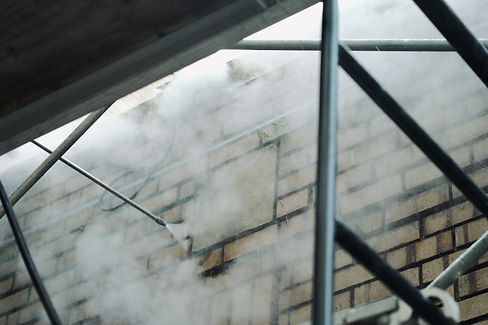
Once the restoration strategy was established, the physical work moved into the hands-on masonry phase. The project involved careful steam cleaning, repointing, and selective repair, all performed with the goal of preserving the maximum amount of original material. The masonry work required patience, consistency, and a strong understanding of traditional repair methods.
The decorative brickwork and limestone accents were cleaned gently so the building’s original patterning could re-emerge without surface damage. Deteriorated mortar was then removed and replaced with a compatible hotlime mortar mix, formulated to perform well in the building’s coastal environment while remaining breathable and sympathetic to the original construction. Minor stabilisation and localized repairs were completed where needed, always with the heritage character of the building in mind.
Cleaning & Repointing
A DOFF steam-cleaning system was used to remove accumulated biological growth, atmospheric soiling, and salt deposits from the buff brick façades. This low-impact method was selected because it allows for effective cleaning without abrasion or harsh chemicals, making it well suited to heritage masonry. Once the masonry had dried, failing mortar was carefully raked out and replaced with a traditional hot-mixed lime mortar.
Hotlime mortar was an important choice for this project. Its breathability and performance characteristics make it highly compatible with older masonry, especially in damp coastal conditions where moisture movement must be managed rather than trapped. The new mortar restored cohesion to the wall system and helped protect the brickwork against future deterioration.

Project Outcome
The restored Pump House now presents a clean, stable, and historically faithful appearance within the active Esquimalt Graving Dock. The brickwork’s decorative rhythm and limestone accents are once again visible, and the building’s masonry has been strengthened for continued service in a demanding marine setting. The result supports both the functional life of the building and its value as a recognized heritage landmark.
This project reflects the kind of work Stone & Trowel is built to do: careful assessment, heritage-sensitive planning, and restoration methods that respect the age, significance, and material reality of the building. In a public industrial setting like the Pump House, that combination of consulting and craftsmanship is essential.
If you manage a heritage or designated property in Greater Victoria or on Vancouver Island, Stone & Trowel provides independent consulting, masonry assessment, and restoration guidance for historic buildings.
Request A Consultation
In need of an assessment when it comes to your heritage masonry project? Fill out the contact form below and we'll be in touch as soon as possible.
Contact us for a consultation or explore our heritage restoration services.